

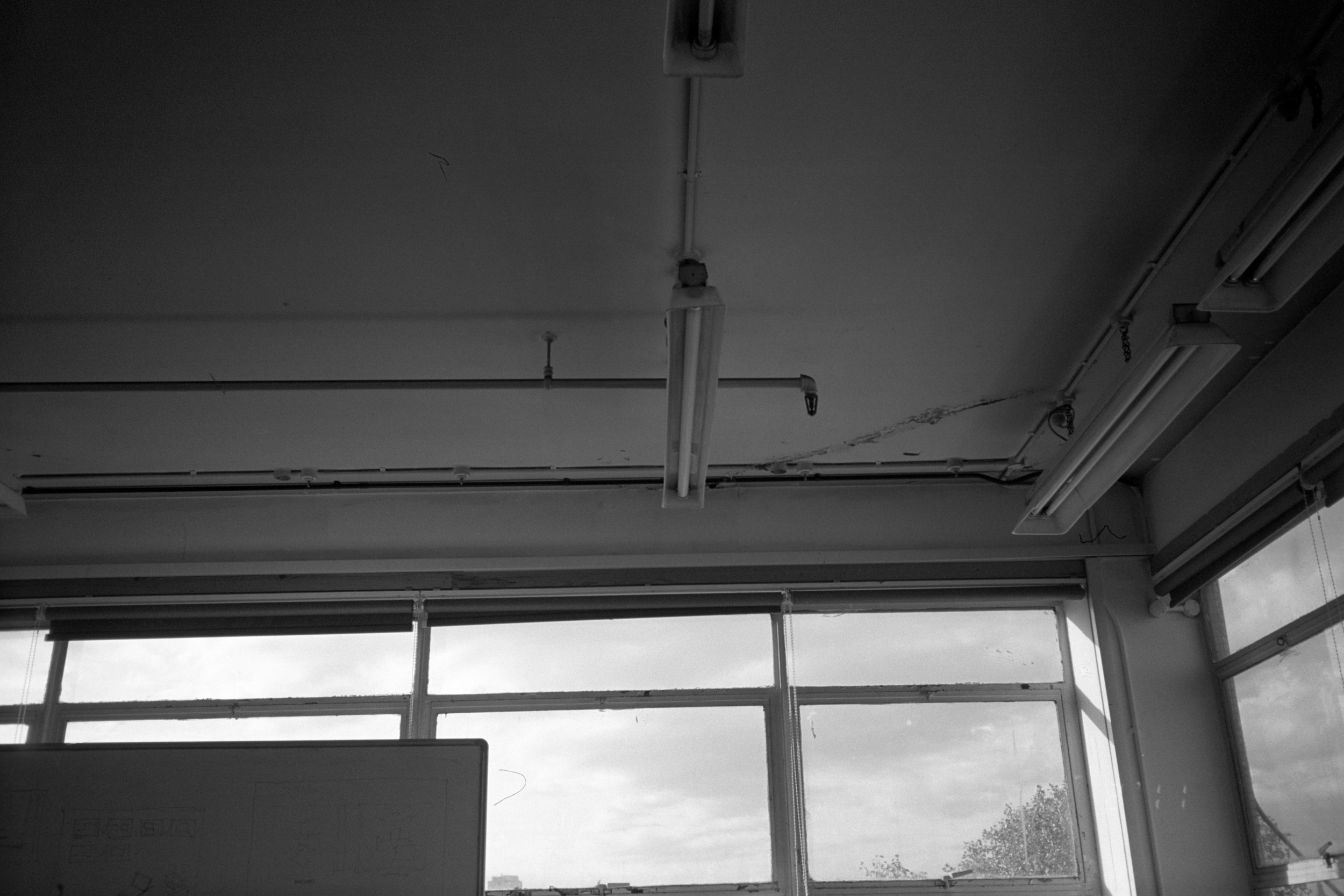
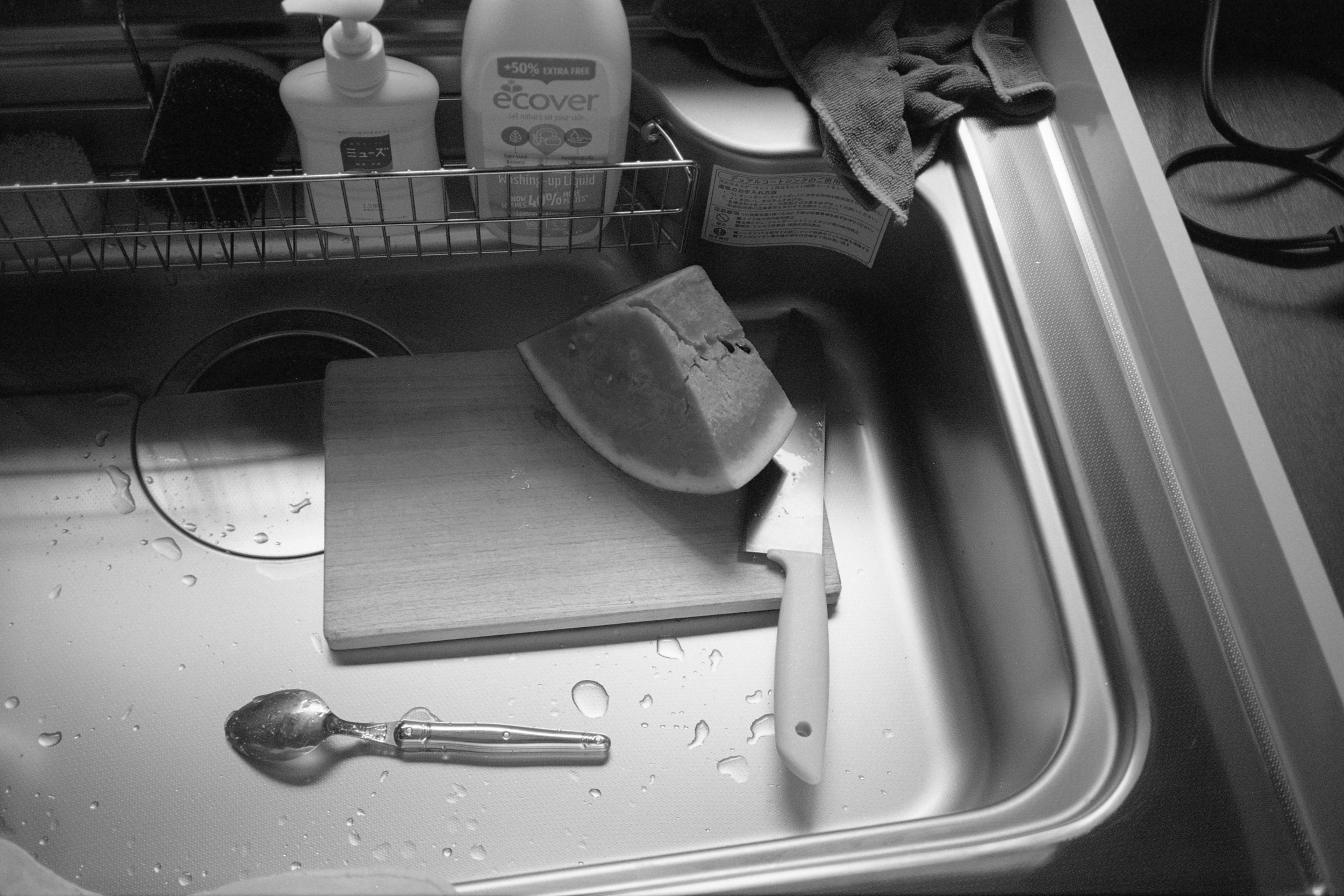
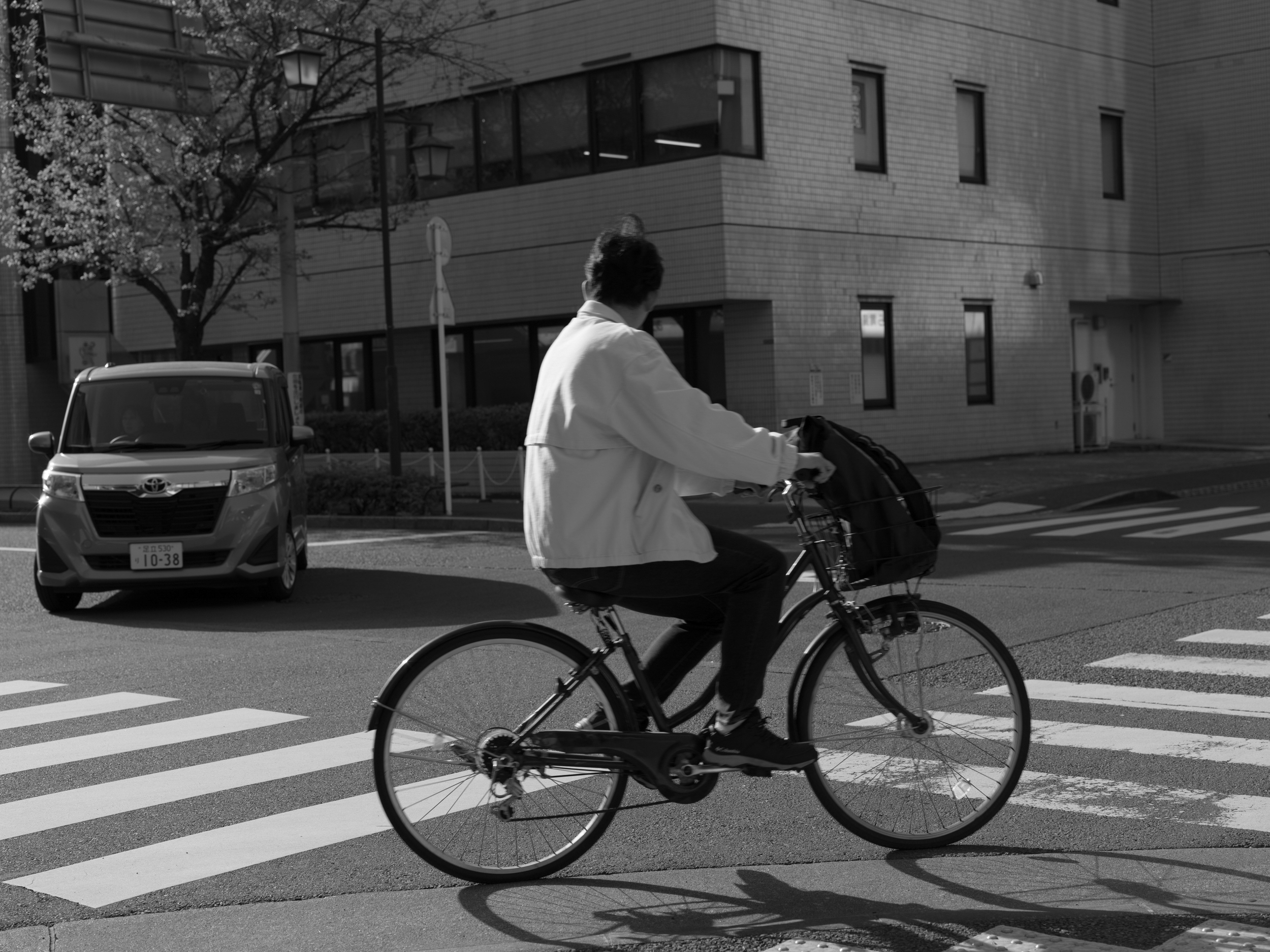
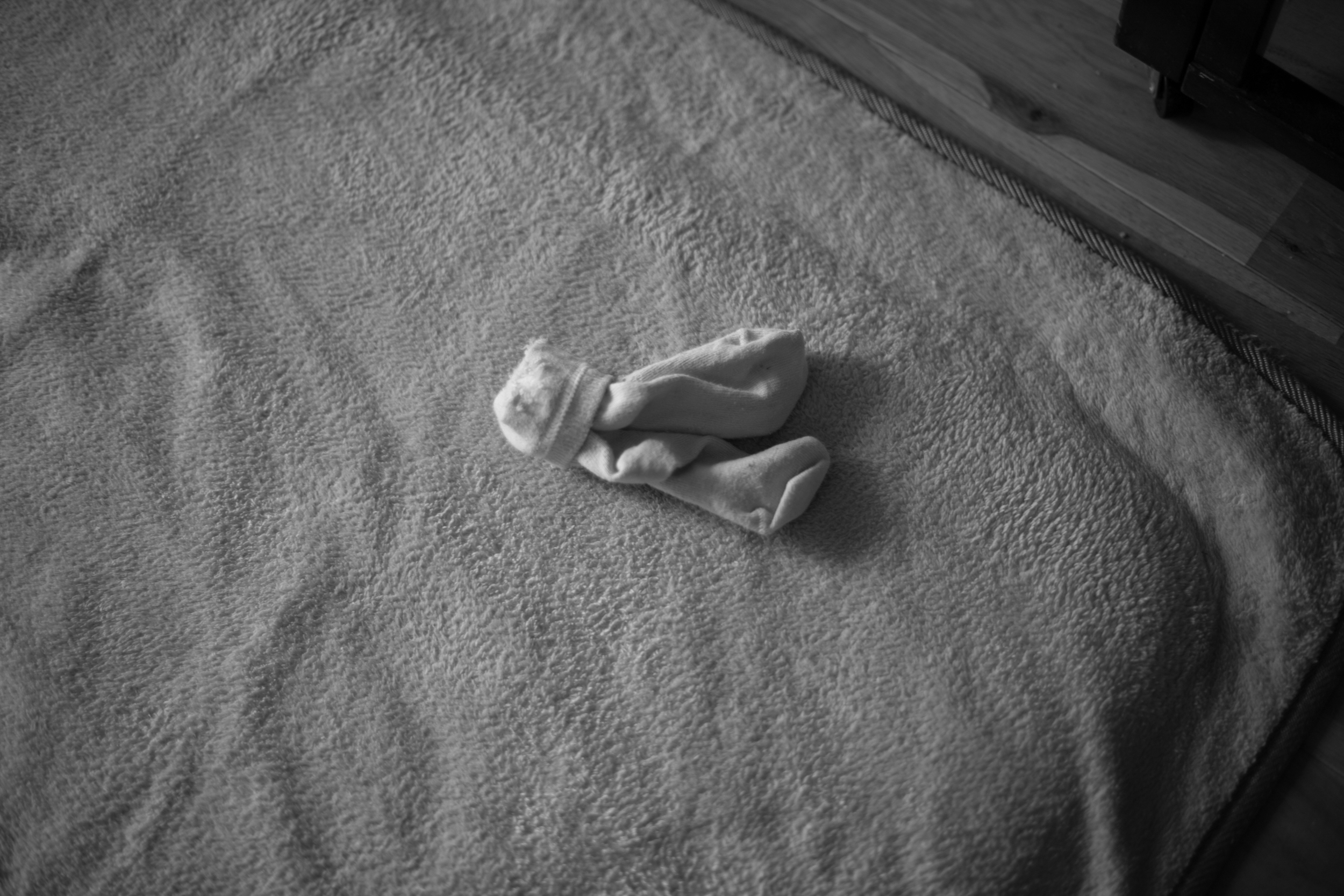


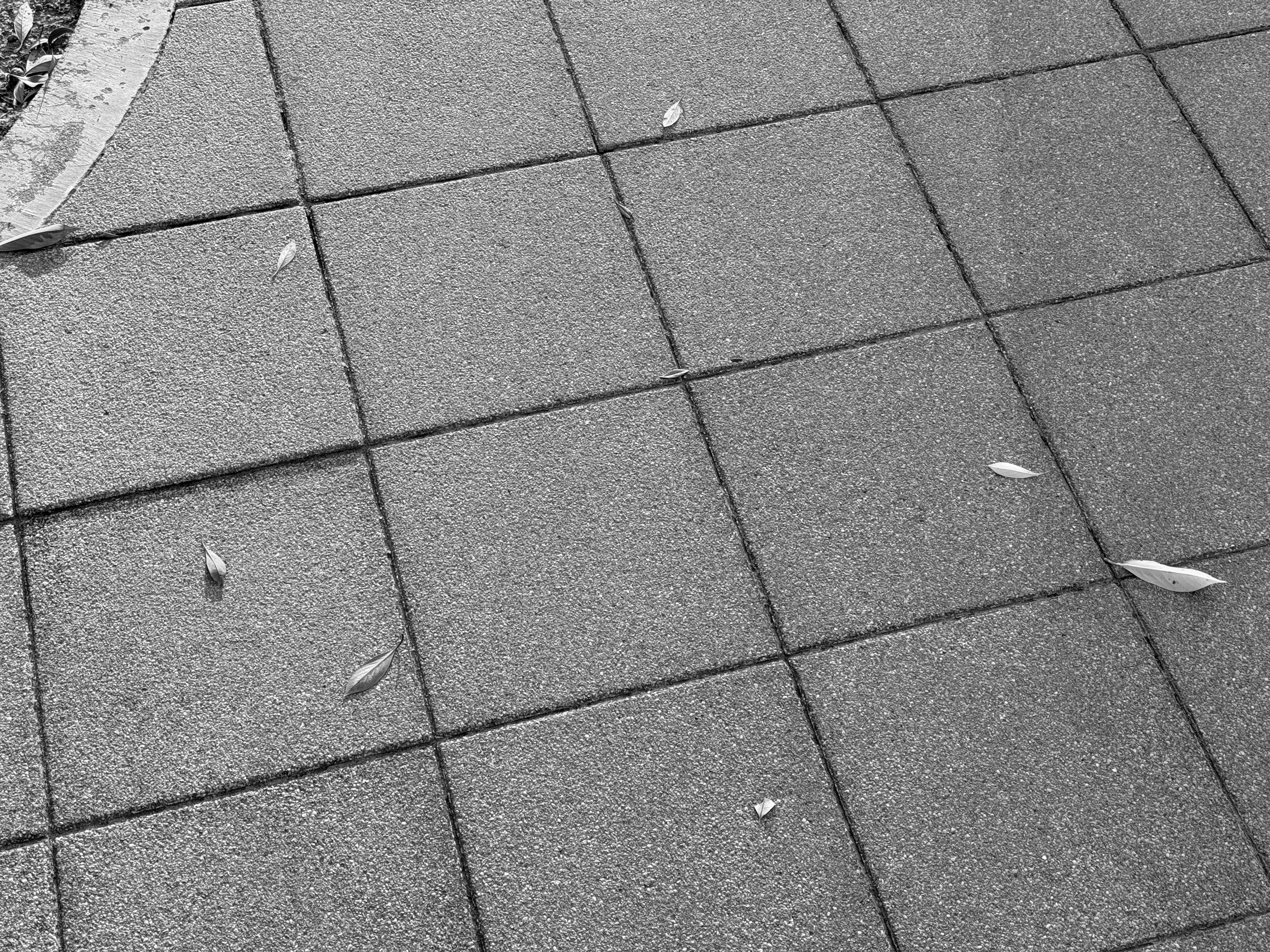


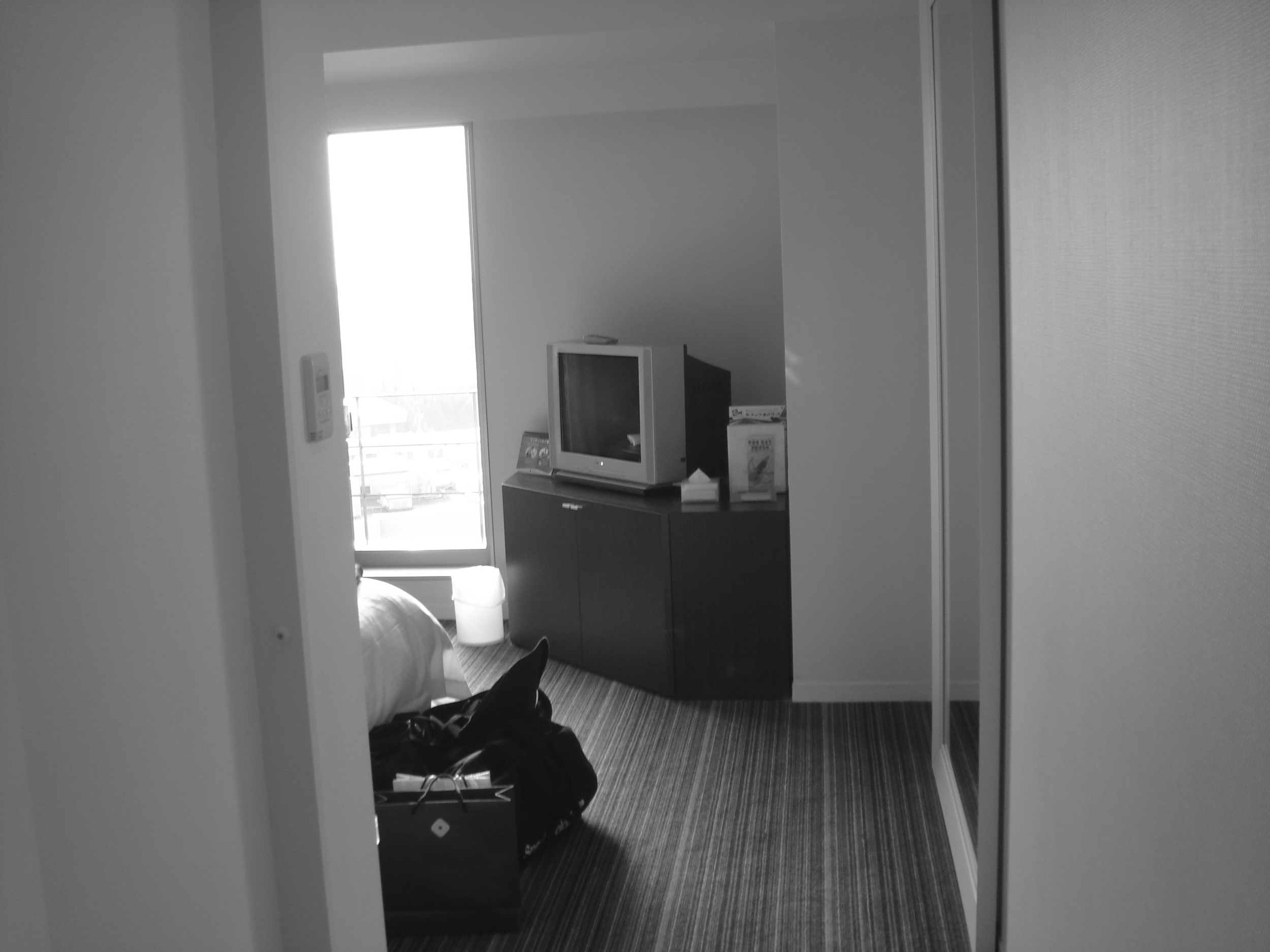
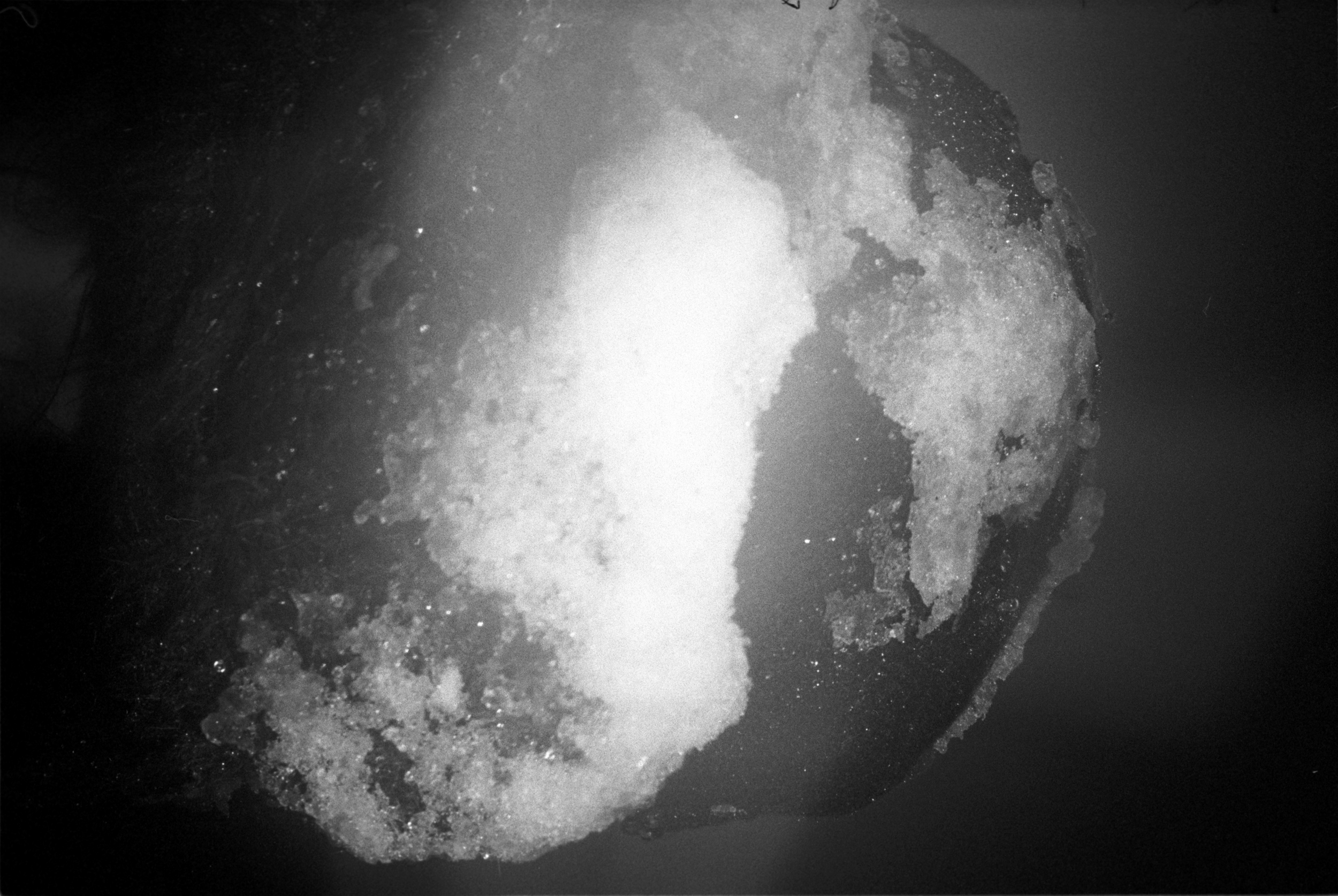

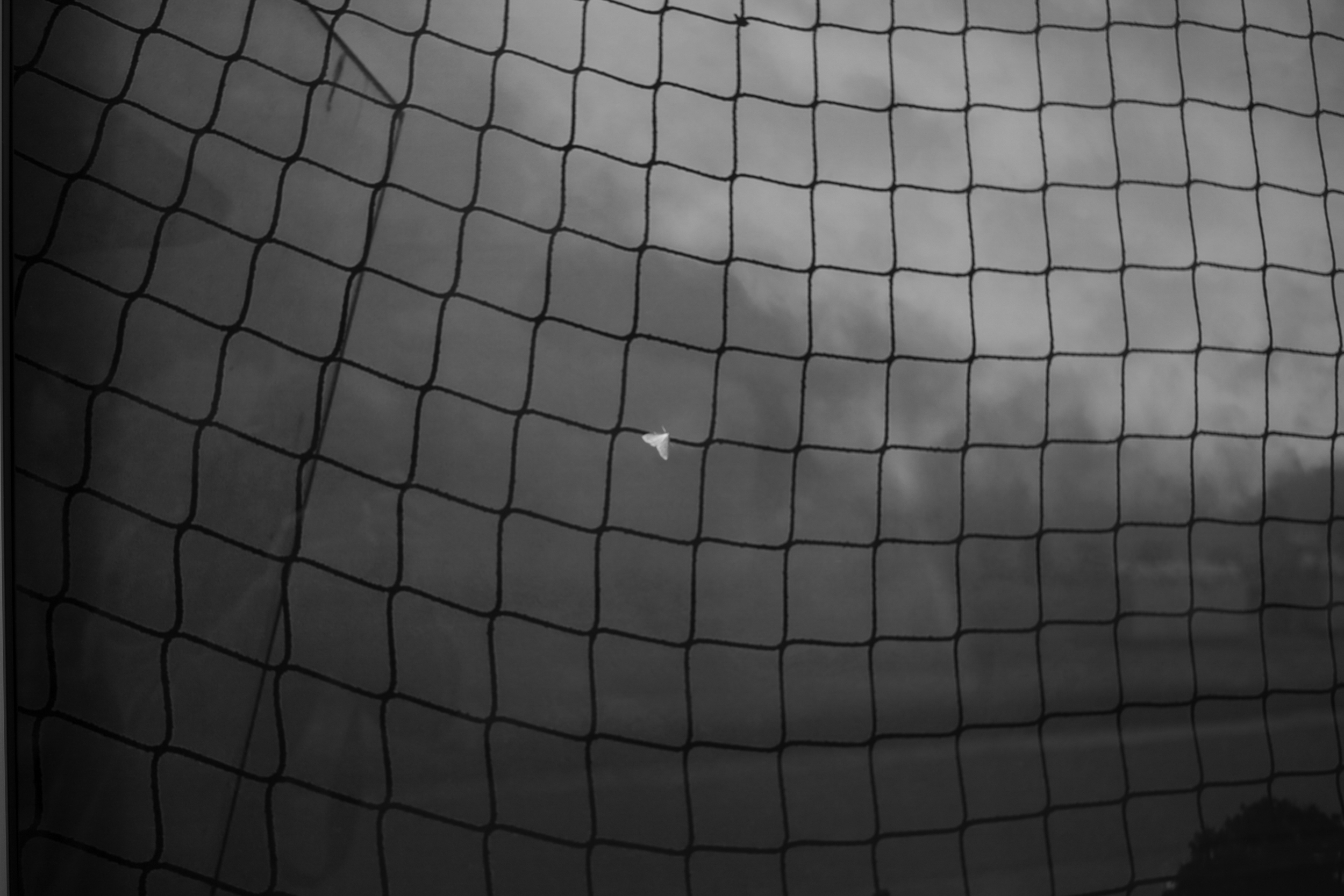
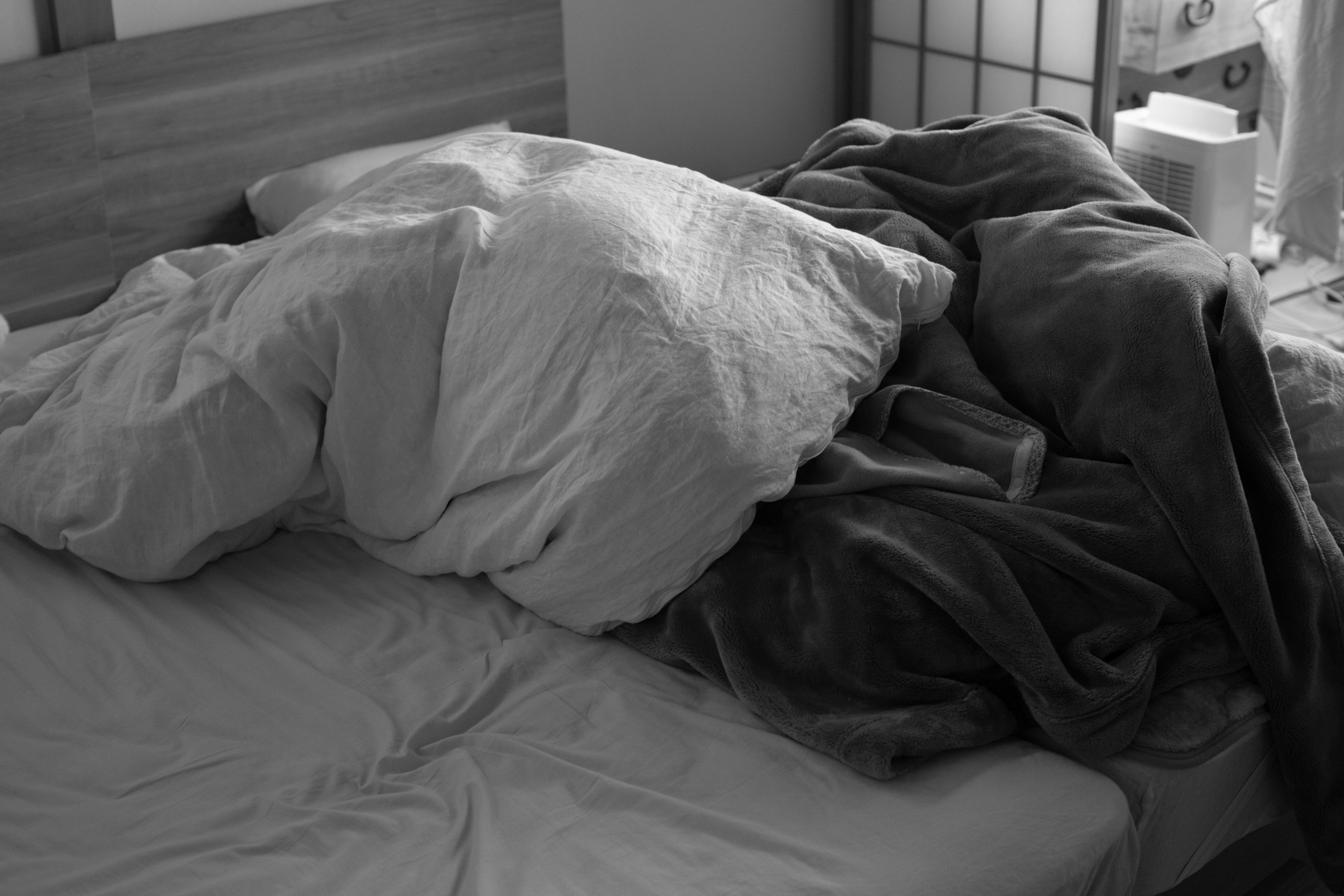
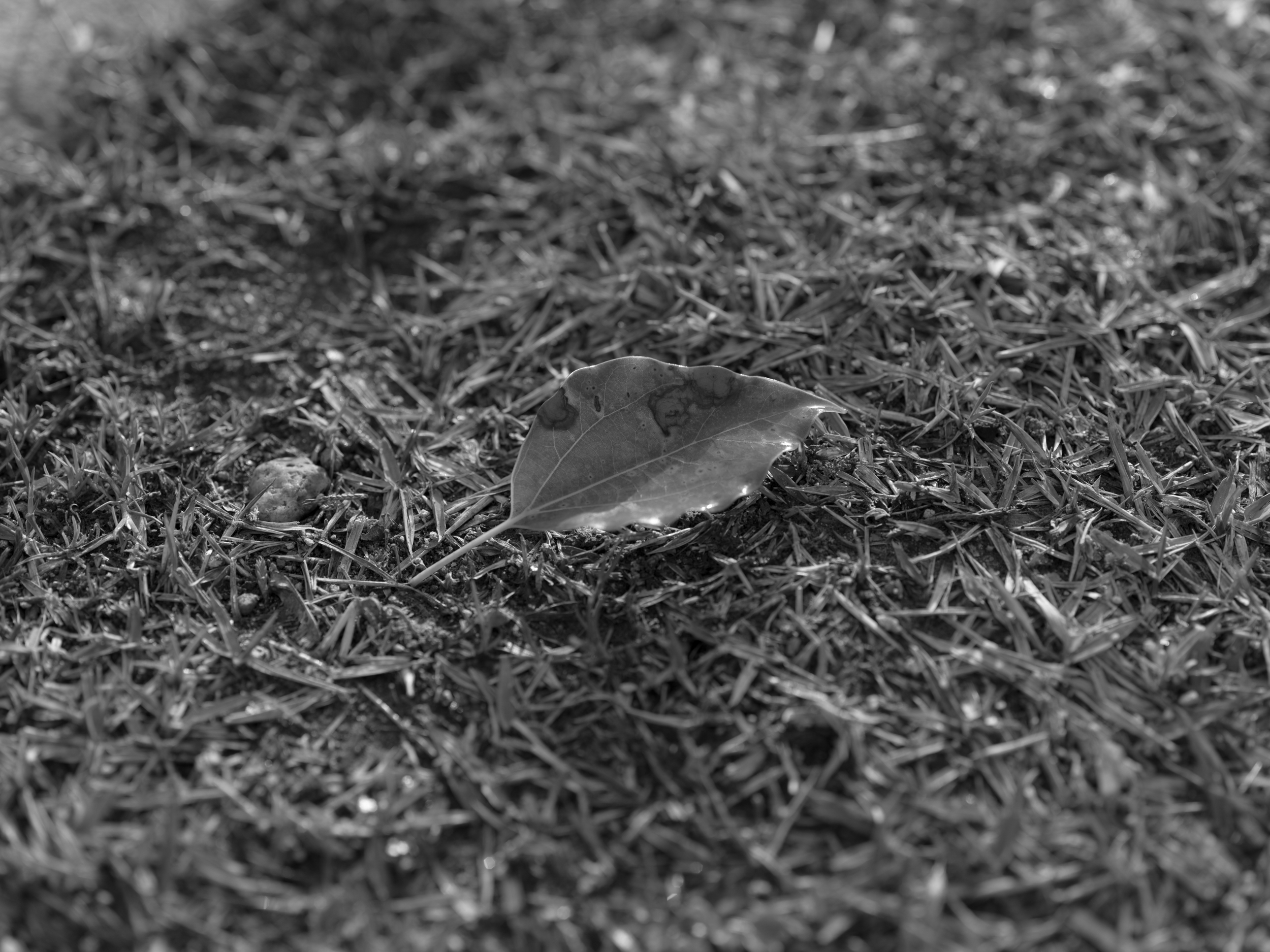


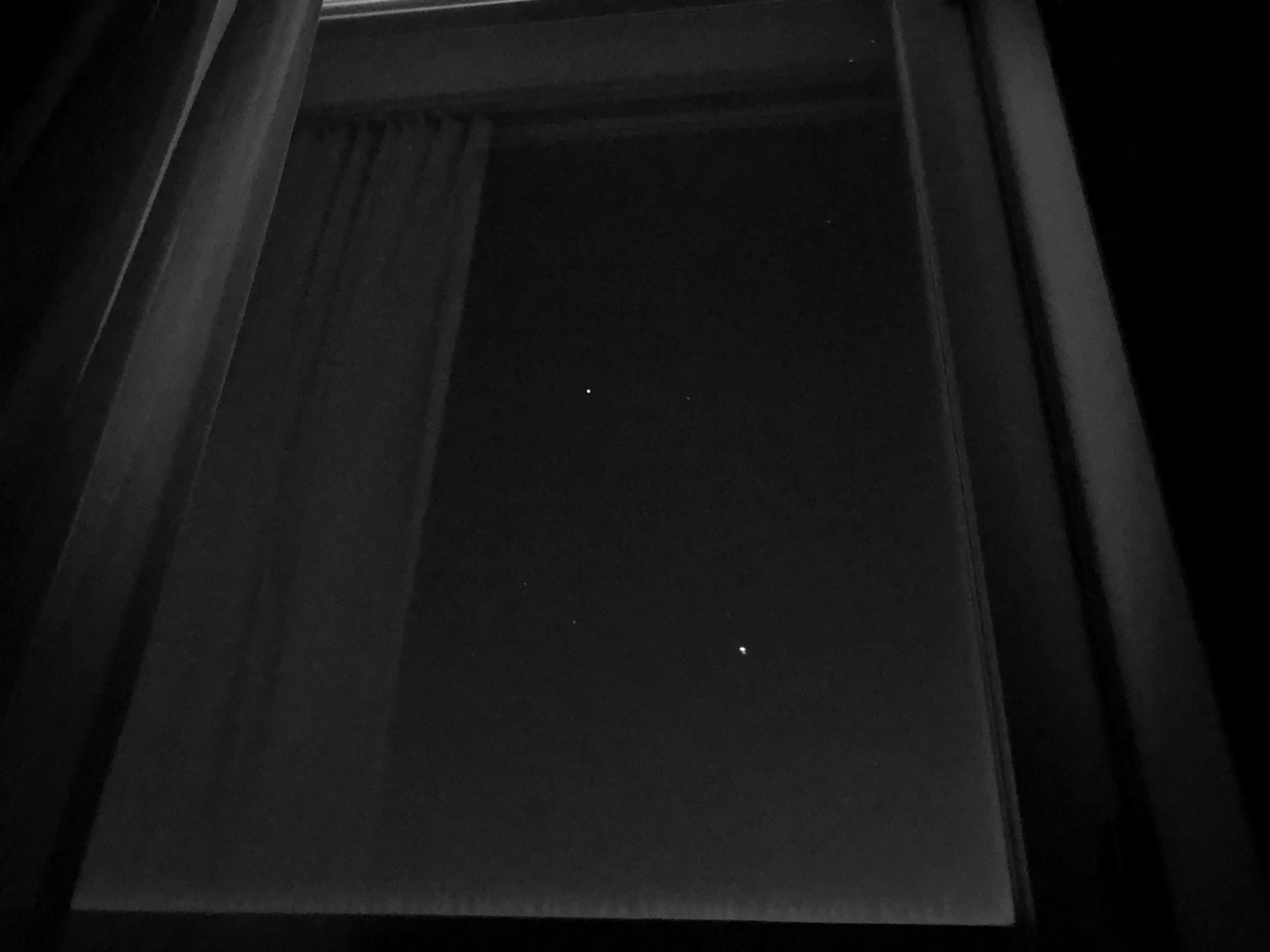
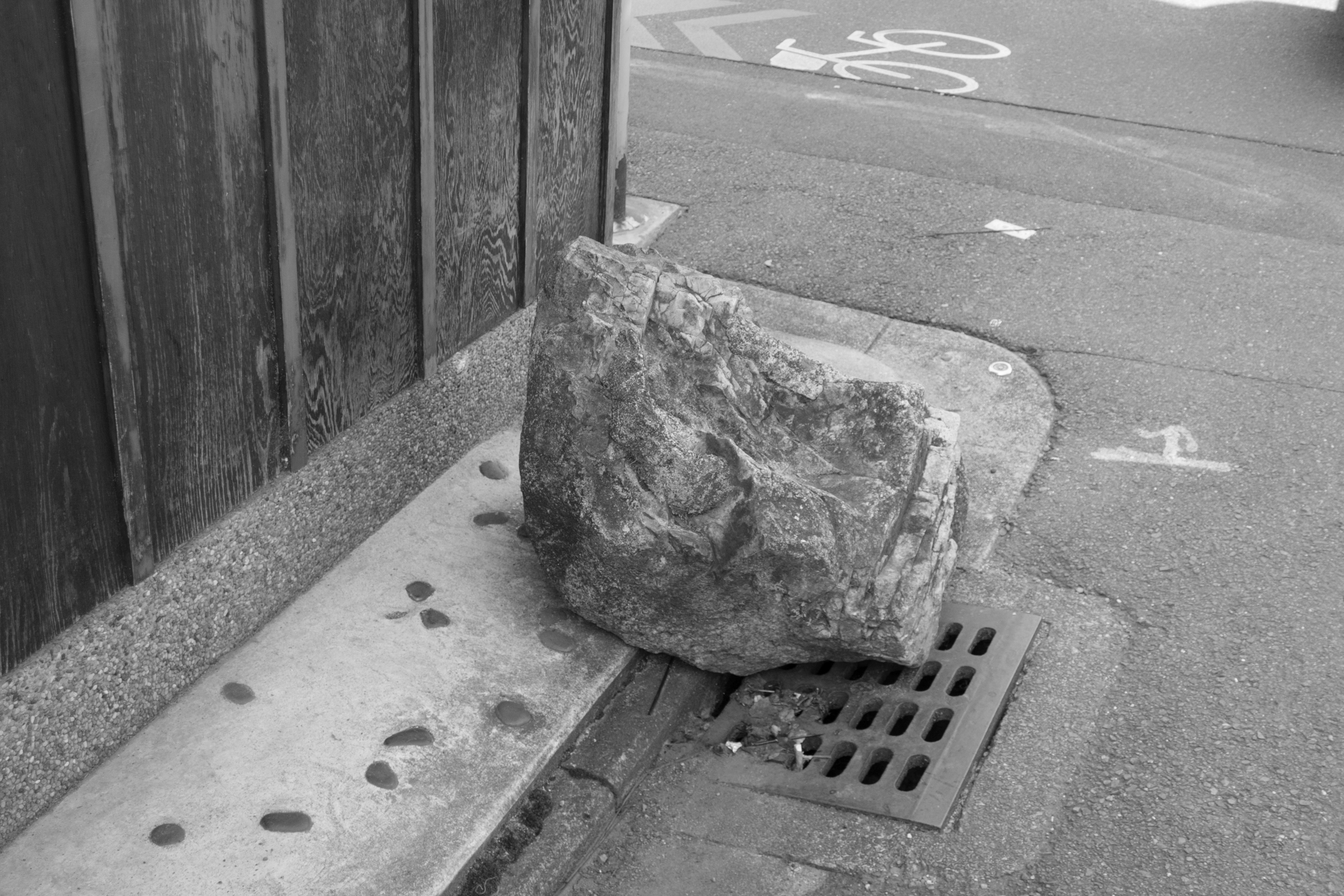

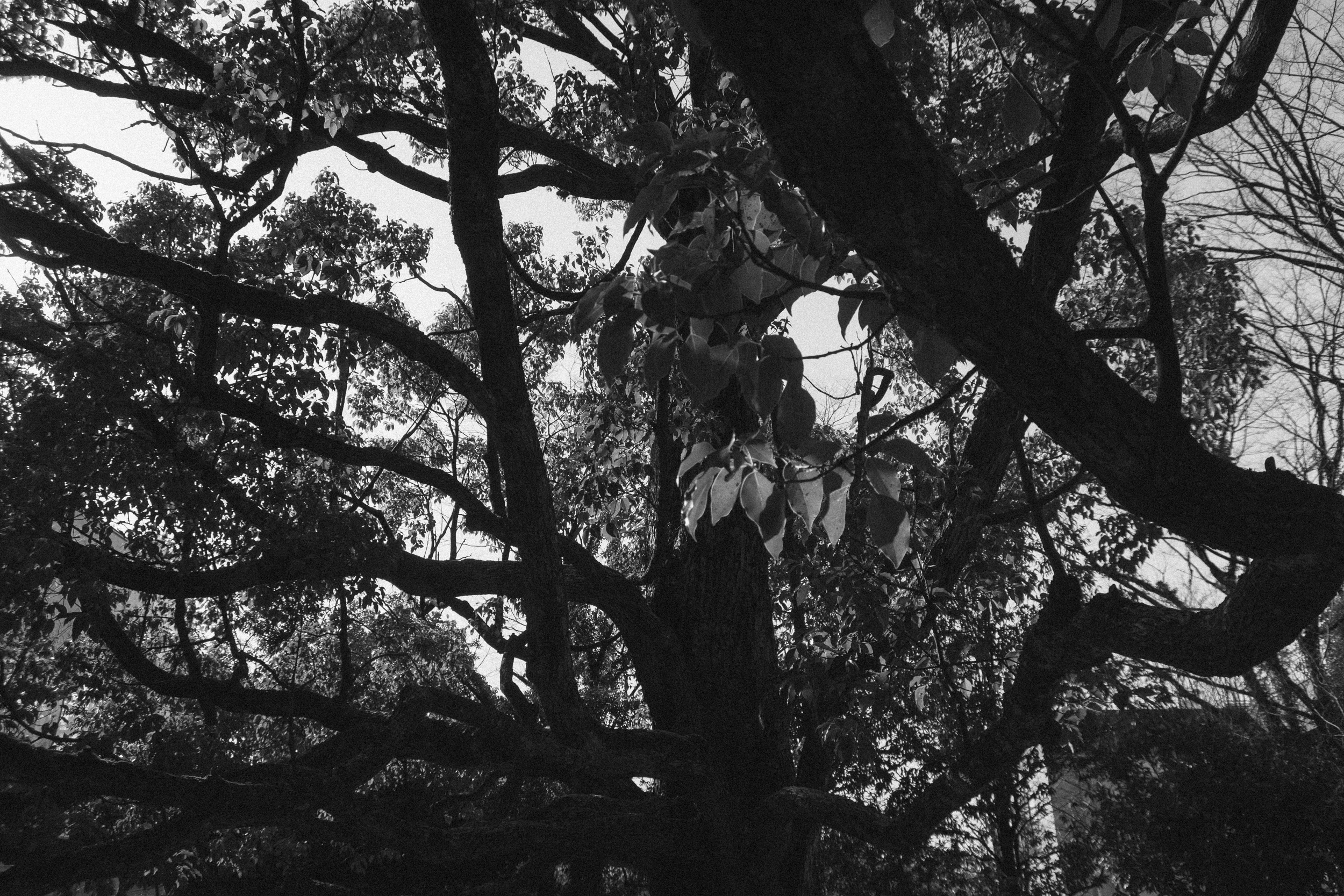
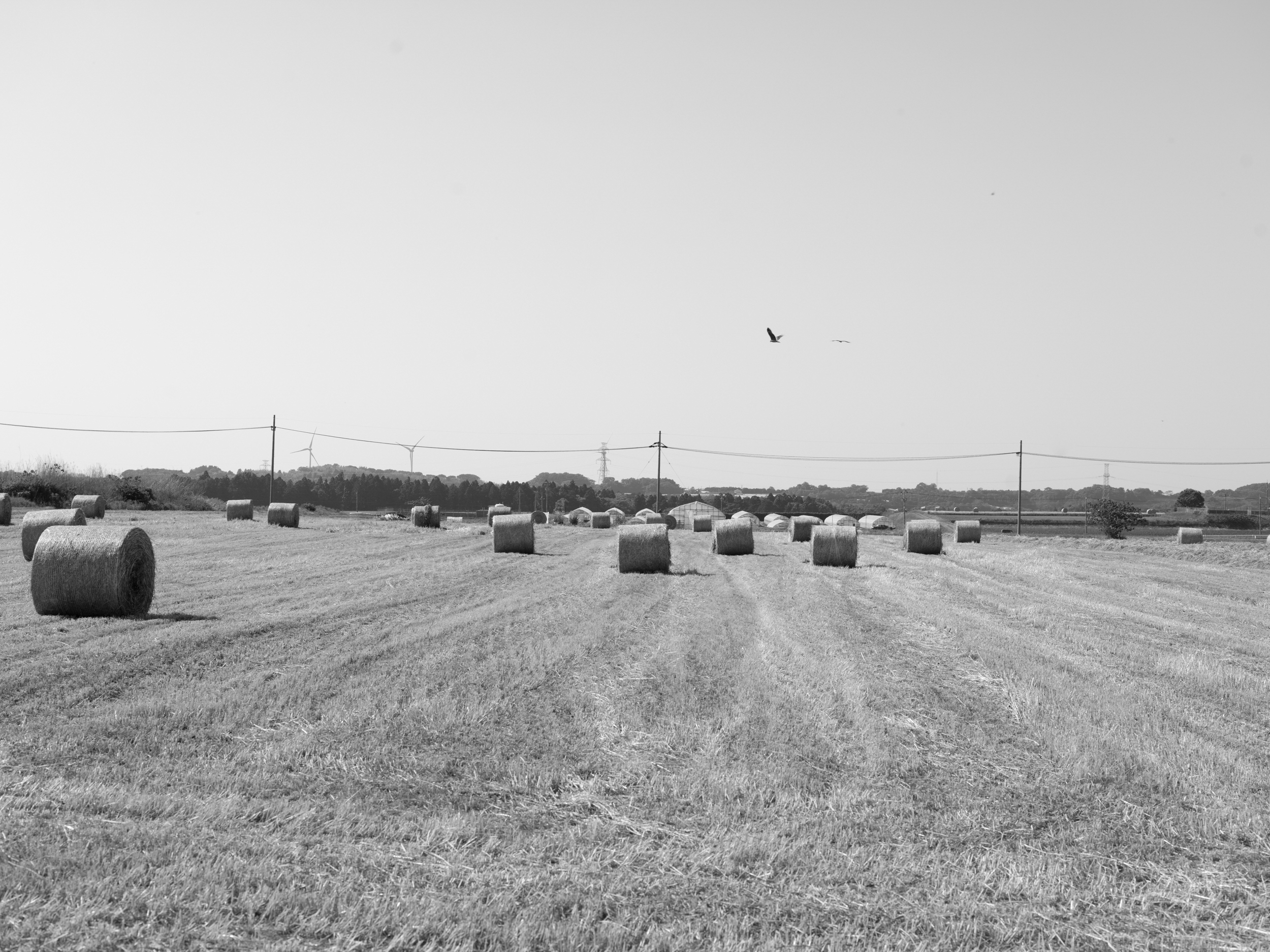


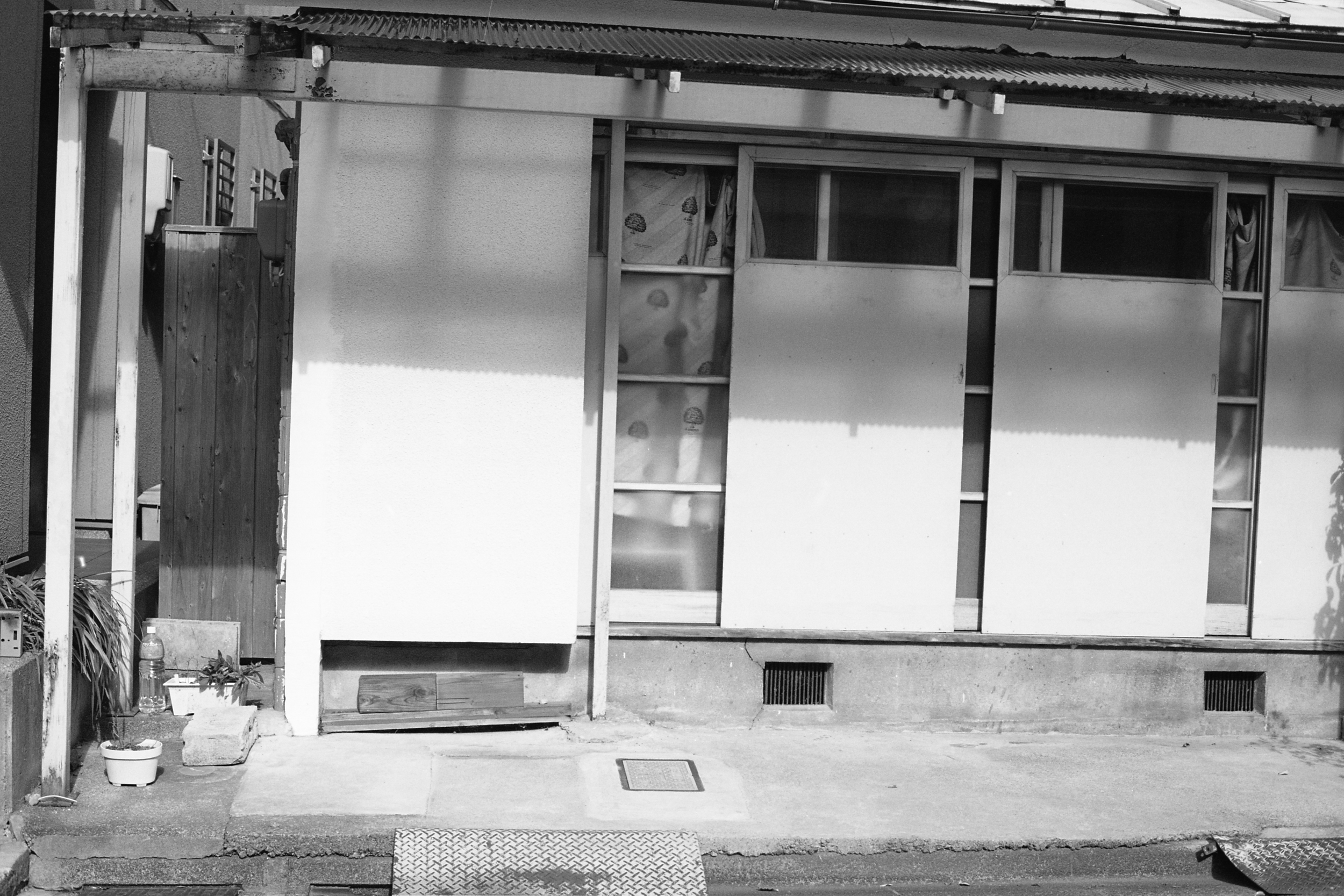


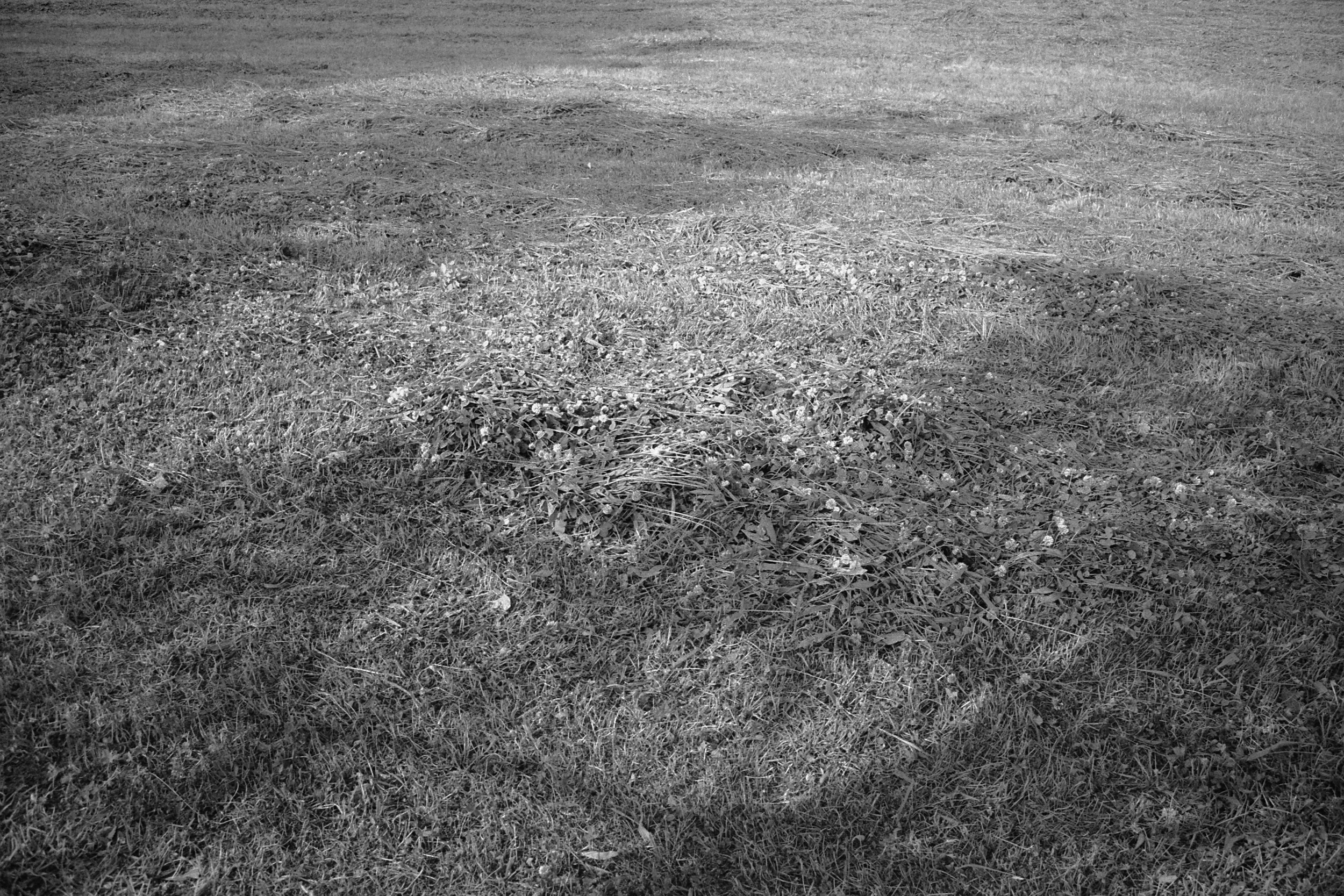

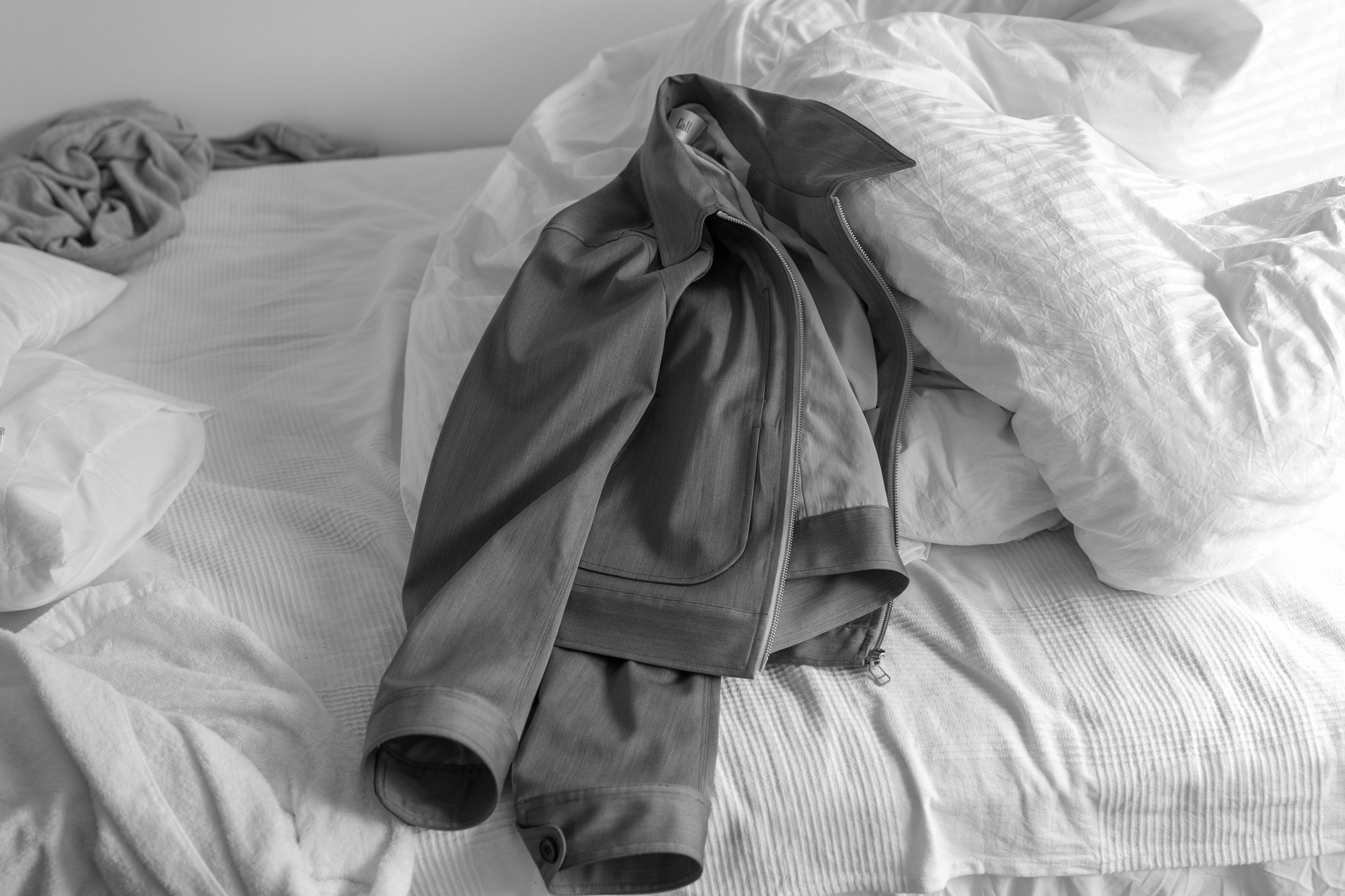


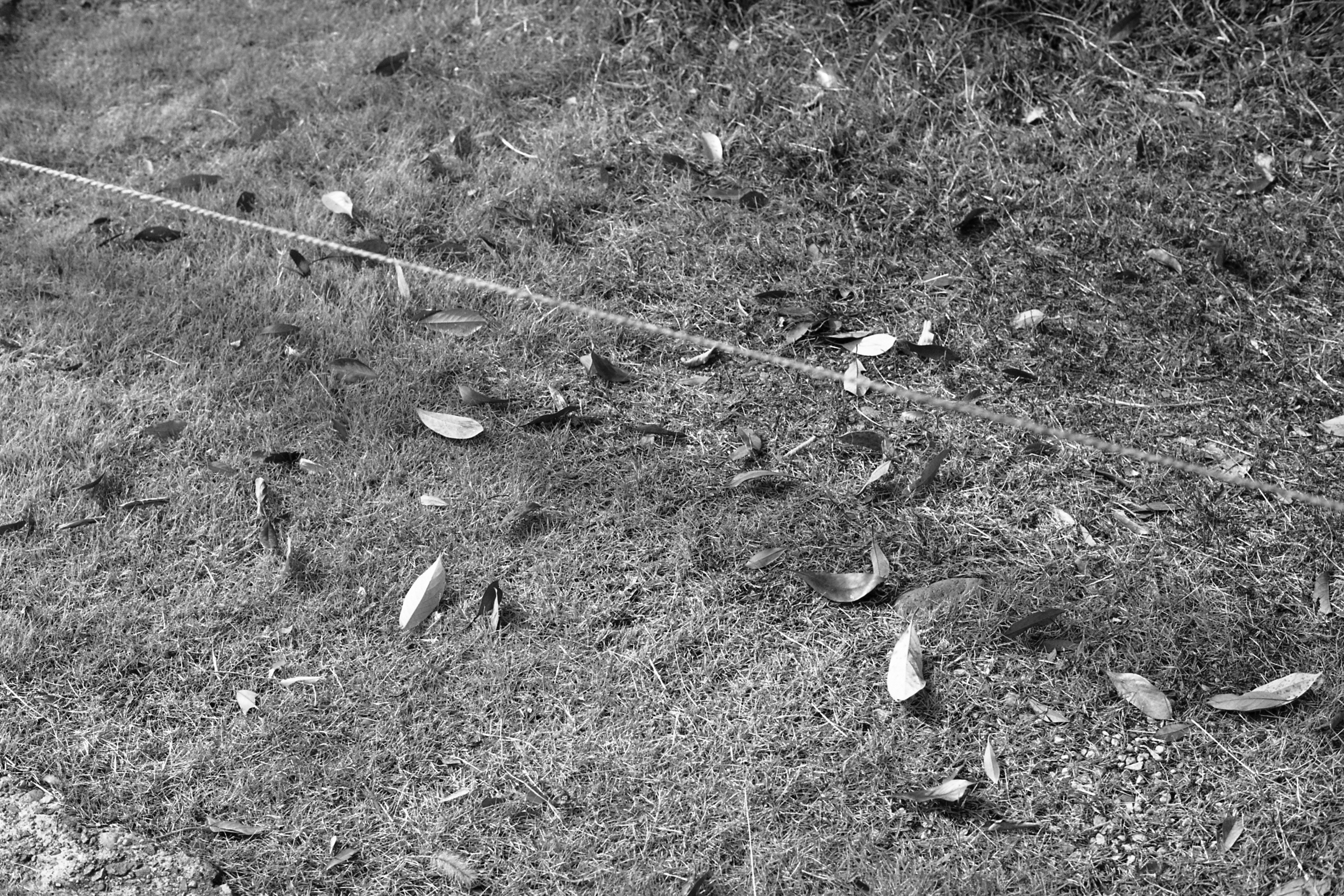
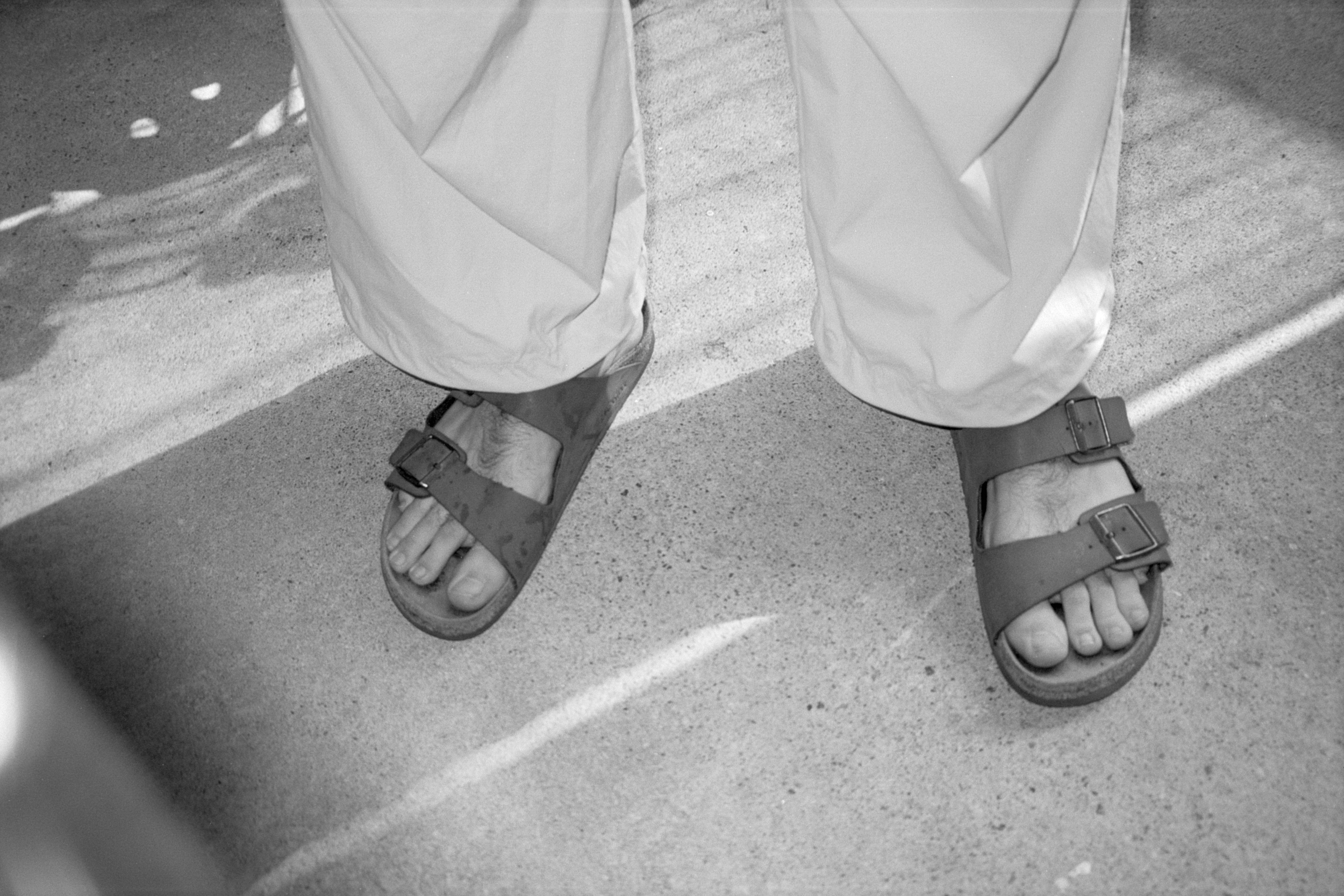

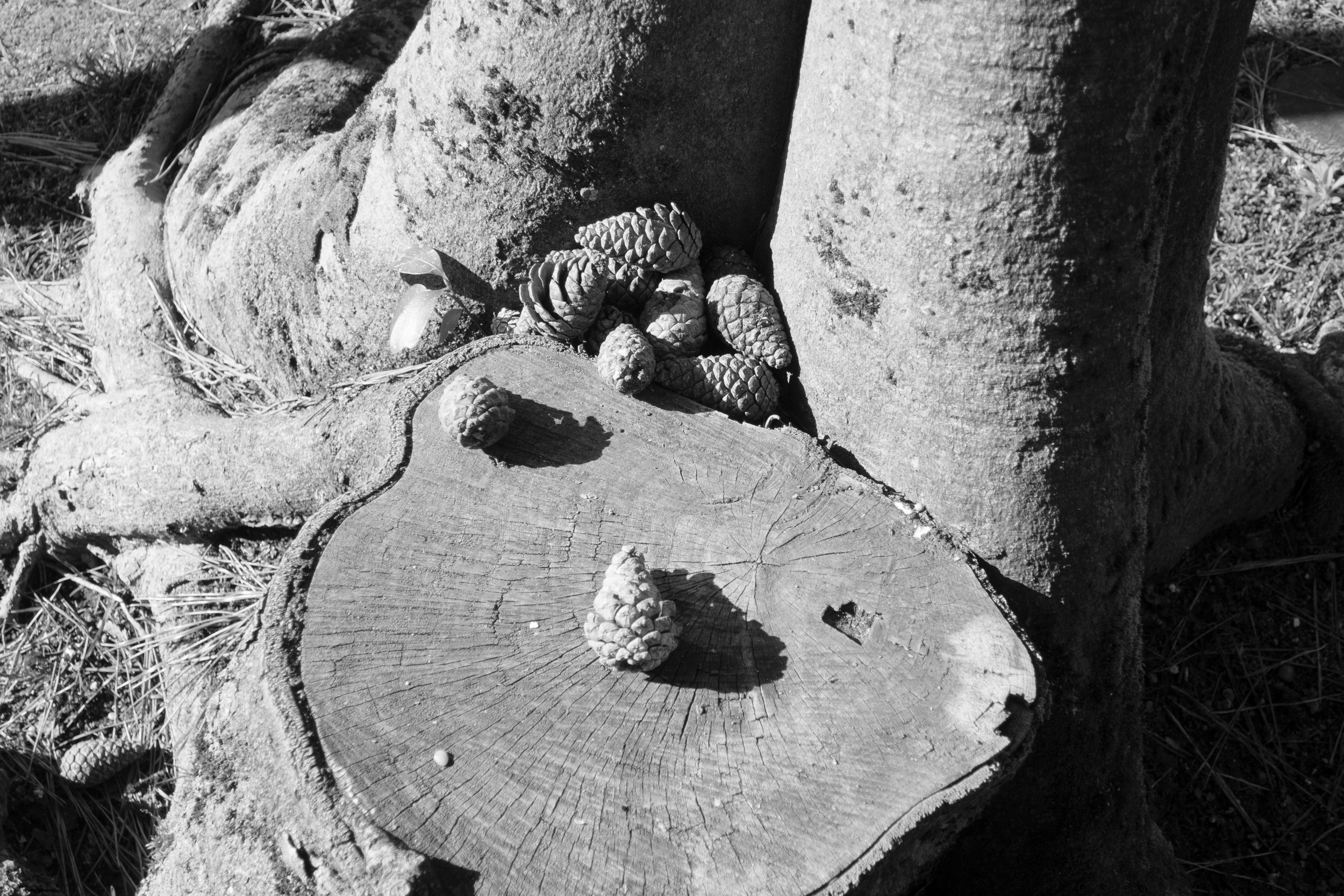
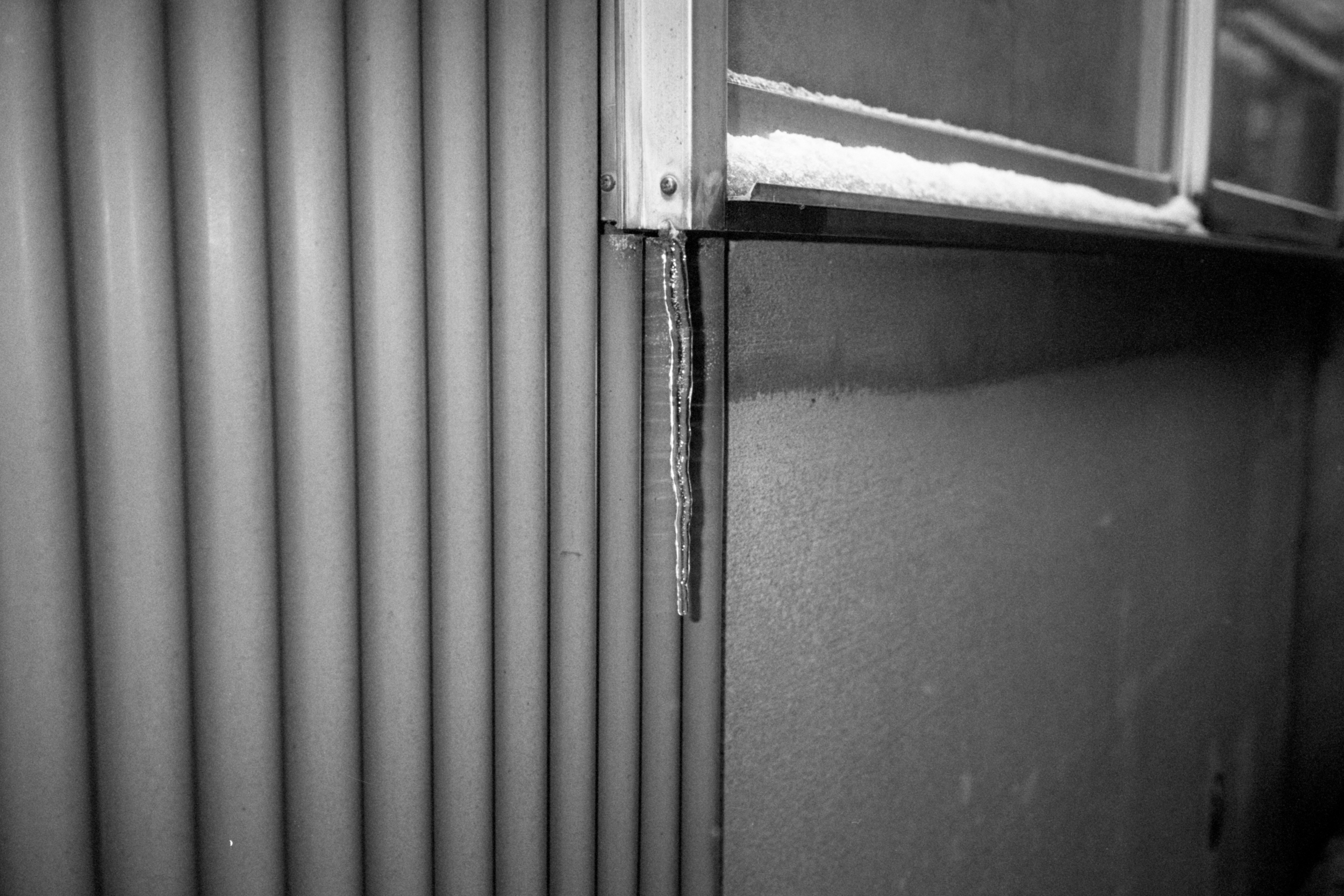
本作は、河野が近年撮影した写真を見返すなかで、そこに写っているものの多くが、すでに手元を離れていることに気づいたことをきっかけに制作された。しかし河野が目指したのは、失われたオブジェの目録を作ることではない。テキストは写真を説明するキャプションとして添えられておらず、写真と、その傍らに置かれた言葉とのあいだにも明確な対応関係はない。独自のレイアウトによって、写真と言葉のあいだから立ち現れるイメージは、ページをめくるたびにふっと浮かび上がり、そしてまた静かに消えていく。
タイトルが示すとおり、本作の視線は、かつてそこにあったものへの郷愁ではなく、失ったその後へと向けられている。これは、詩人・谷川俊太郎による詩「そのあと」(2013年)への静かなオマージュでもある。私たちは気づかぬうちに多くのものを手放しながら、同時に新たな何かを手にしながら生きている。経年変化があらわれやすい用紙の選定も、このテーマと深く響き合っている。
This work began when Kono, while looking back through photographs he had taken in recent years, realised that many of the objects depicted in them were no longer in his possession. Yet what he sought was not to compile a catalogue of lost things. The texts are not placed alongside the photographs as captions, nor is there any clear correspondence between a given image and the words that appear beside it. Through its distinctive layout, the images that emerge between photograph and text seem to surface briefly with each turn of the page, only to quietly disappear again.
As the title suggests, the work directs its gaze not toward nostalgia for what once existed, but toward what comes after loss. It is also a quiet homage to the poem "Sono Ato" (2013) by the poet Shuntaro Tanikawa. Without noticing, we let go of many things, while at the same time continuing to take hold of something new. The choice of paper, which readily reveals traces of aging, resonates deeply with this theme.